Ao ajudar outras pessoas a cuidarem da saúde, você desbloqueou o Guia Harvard de Alimentação Saudável — completamente grátis para você!
👋
Bem-vindo de volta!
Encontramos um relatório anterior associado a este dispositivo. O que deseja fazer?
🔒 Seus dados ficam salvos apenas neste dispositivo
⚠️
Atenção — Dados serão apagados!
Se gerar um novo laudo, todos os dados do relatório atual serão perdidos, incluindo o acesso ao download do PDF já pago.
Certifique-se de ter baixado seu relatório antes de continuar.
👋 Seu amigo descobriu o número real de gordura corporal dele aqui. Descubra o seu agora — e compartilhe também 👇
O método oficial das Forças Armadas dos EUA desde 1981
Calculadora de IMC Grátis + Método Navy Profissional
Calcule seu IMC em segundos e descubra sua composição corporal real com o método científico usado pelas Forças Armadas dos EUA.
Calculadora de IMC — 100% Gratuita
Preencha seus dados abaixo e calcule seu Índice de Massa Corporal instantaneamente.
Seu IMC
—
—
—Peso ideal (kg)
⚖️
—Risco de saúde
🩺
—TMB (kcal/dia)
🔥
⚠️Importante: O IMC não mede gordura corporal real. Pessoas com o mesmo IMC podem ter 12% ou 35% de gordura. O Método Navy revela o que o IMC não consegue medir.
Você calculou o IMC. Mas qual é o seu % de gordura real?
O IMC é apenas uma estimativa. O Método Navy revela sua composição corporal com precisão científica.
⏰ Oferta especial expira em: 09:59
De R$ 49,90
R$19,90
🔥 60% de desconto — tempo limitado
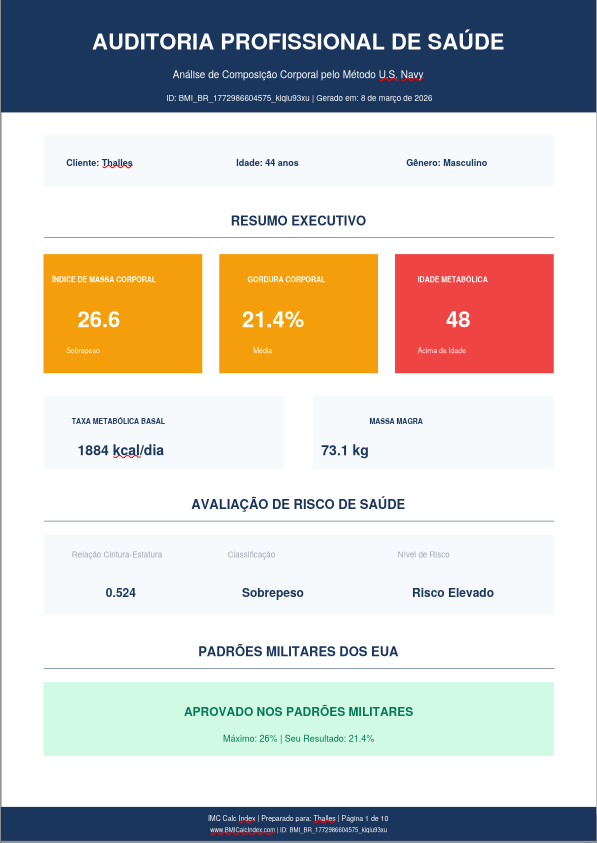
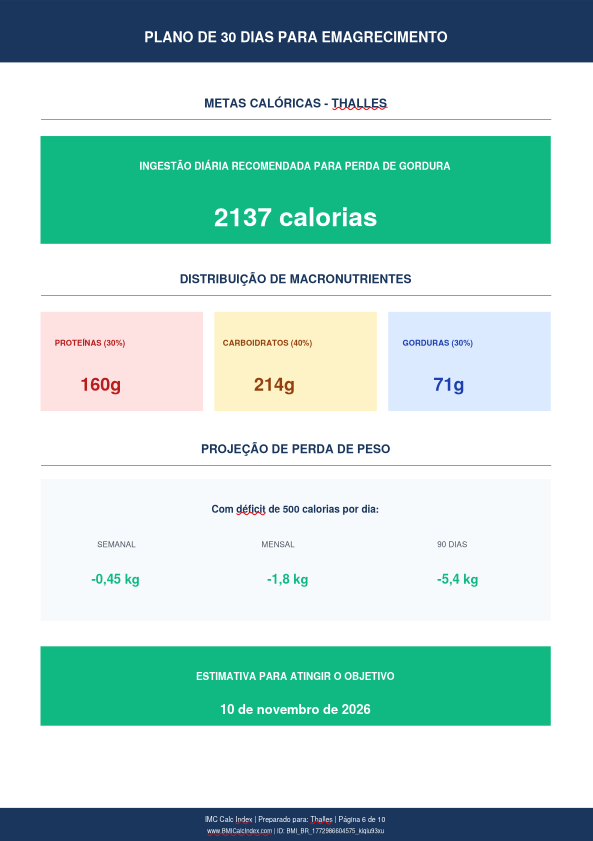
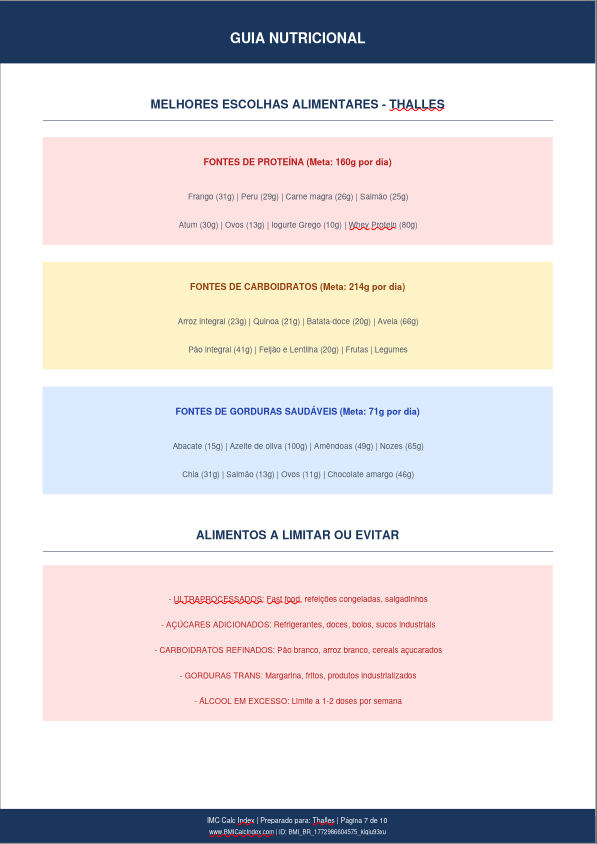
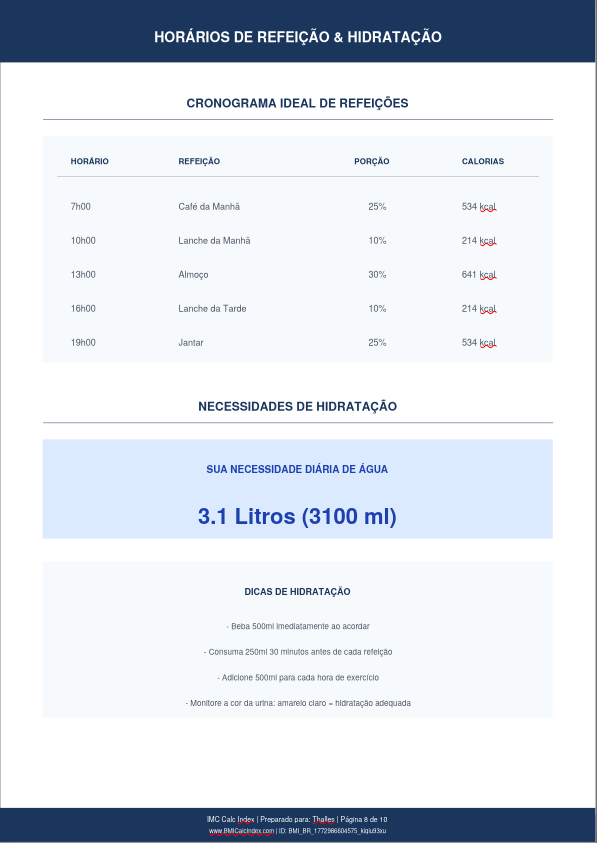
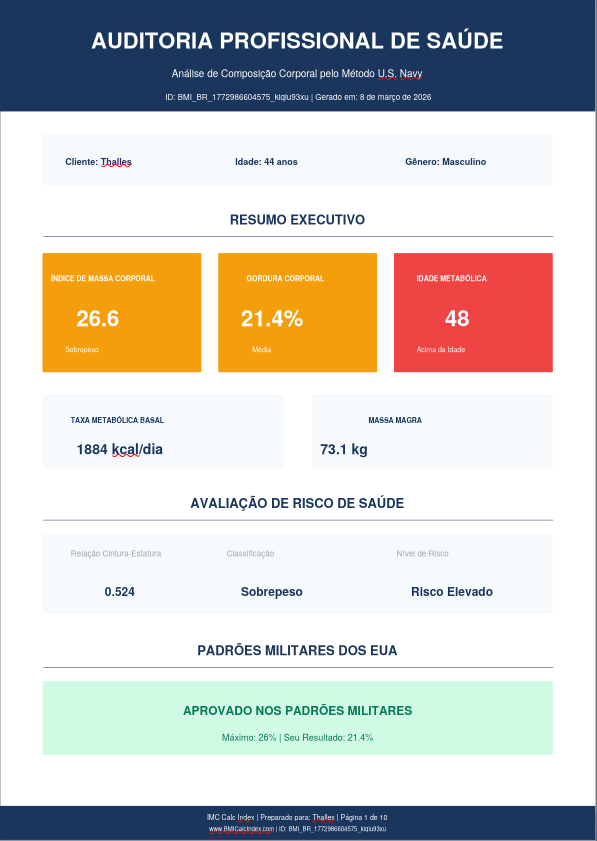
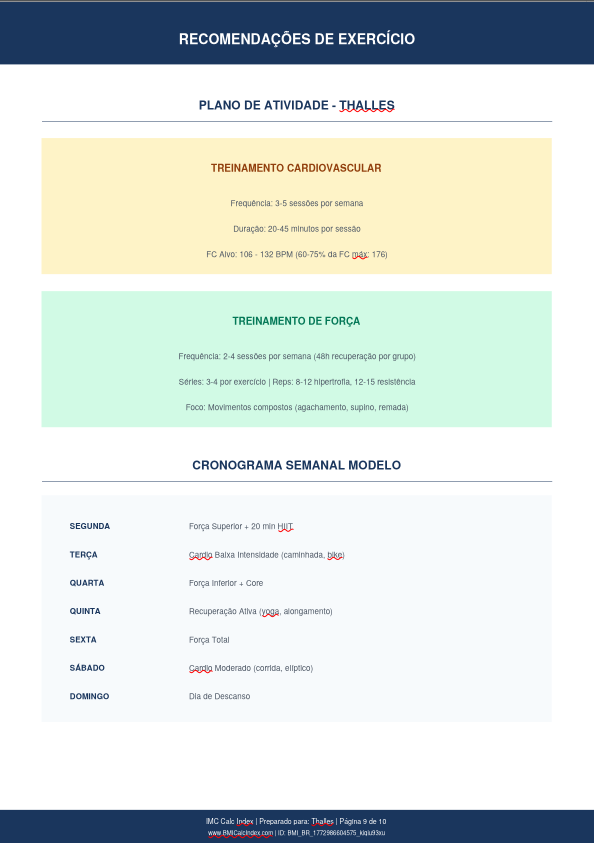
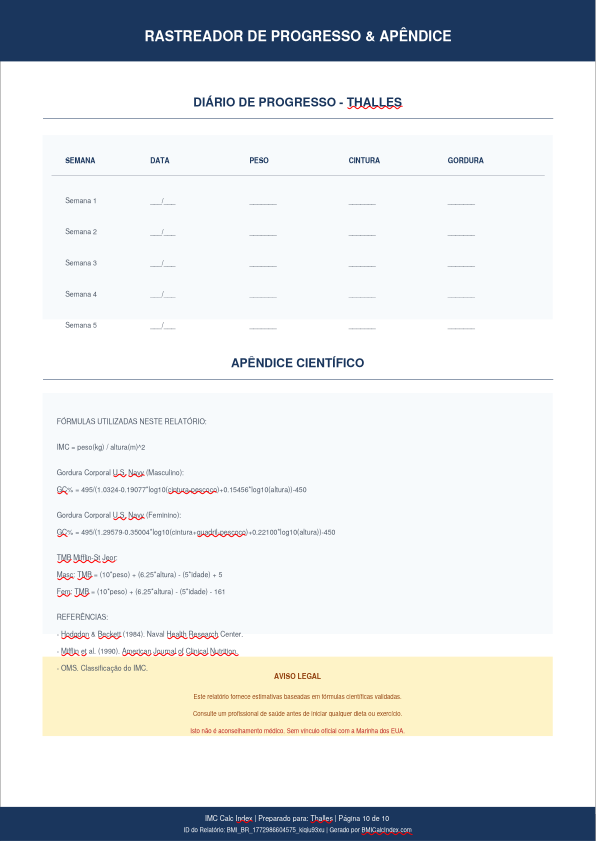
📄 Relatório com 10 Páginas de Análise Profissional
Painel ExecutivoMetodologiaComposição CorporalRisco de SaúdeAnálise MetabólicaPlano 30 DiasGuia NutricionalHidrataçãoExercíciosRastreador
Relatório gerado com seu nome, medidas e metas individuais
📏 Adicione suas medidas para o Método Navy:
✓
% de gordura corporal real (Método U.S. Navy)
✓
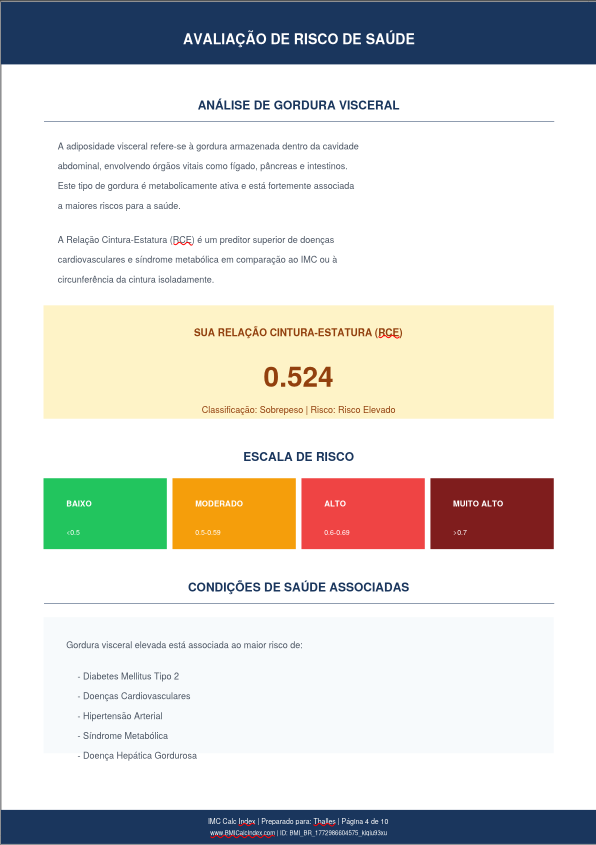
Análise de risco de saúde e gordura visceral (RCE)
✓
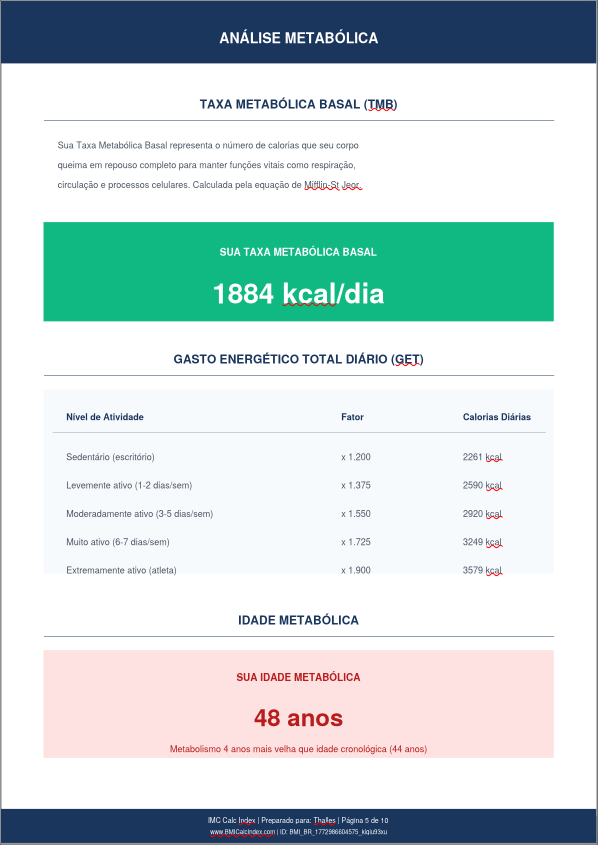
Taxa Metabólica Basal e Gasto Energético Total
✓
Plano alimentar com distribuição de macronutrientes
✓
Cronograma semanal de exercícios personalizado
✓
Rastreador de progresso de 30 dias imprimível
✓
Comparação com padrões militares americanos
✅
Seu Laudo foi Gerado com Sucesso!
10 páginas personalizadas com seus dados estão prontas
💡 O mesmo diagnóstico que clínicas de nutrição cobram R$150 — personalizado com seus dados, pronto para baixar agora.
🔒Pág. 1
🔒Pág. 2
🔒Pág. 3
🔒Pág. 4
🔒Pág. 5
🔒Pág. 6
🔒Pág. 7
🔒Pág. 8
🔒Pág. 9
🔒Pág. 10
Desbloqueie seu laudo completo por apenas R$ 49,90R$ 19,90
🔒 Pagamento 100% seguro · PDF imediato após aprovação · Downloads ilimitados
✅
Pagamento Aprovado!
Seu relatório profissional está pronto. Clique abaixo para baixar seu PDF personalizado.
Downloads ilimitados disponíveis para esta compra
🎁 BÔNUS EXCLUSIVO
Ganhe o Guia Harvard de Alimentação Saudável!
Compartilhe nossa página e ajude outras pessoas a cuidarem da saúde. Em troca, você desbloqueia um guia nutricional baseado em Harvard — gratuitamente.
Depoimentos de Quem Usou a Calculadora IMC Calc Index
★★★★★
Mariana Costa
São Paulo — SP
"Finalmente entendi meu corpo! Meu IMC estava normal, mas o relatório Navy mostrou que minha gordura estava acima do ideal. Sem esse relatório eu não saberia."
★★★★★
Carlos Mendes
Belo Horizonte — MG
"O plano de 30 dias foi exatamente o que eu precisava. Segui o cronograma semanal de exercícios e já perdi 4 kg no primeiro mês. Vale muito mais do que R$19,90!"
★★★★★
Fernando Lima
Curitiba — PR
"Relatório profissional de verdade! Mostrei para minha nutricionista e ela disse que as informações eram precisas e muito úteis para montar meu plano alimentar."
★★★★★
Ricardo Alves
Porto Alegre — RS
"Treino há 3 anos e nunca soube exatamente minha composição corporal. O relatório Navy me mostrou que tenho 11% de gordura — nível atlético! Isso me motivou muito a continuar."
★★★★★
Juliana Santos
Fortaleza — CE
"Fiz o IMC grátis e fiquei curiosa. Comprei o relatório Navy e descobri que minha gordura visceral estava elevada, mesmo sem aparecer na balança. Um ótimo alerta de saúde!"
Perguntas Frequentes sobre IMC e Composição Corporal
Tudo que você precisa saber sobre IMC, Método Navy e análise de gordura corporal.
O IMC (Índice de Massa Corporal) é calculado dividindo seu peso em quilogramas pelo quadrado de sua altura em metros: IMC = peso (kg) ÷ altura² (m). Exemplo: uma pessoa de 70 kg e 1,75 m tem IMC = 70 ÷ (1,75 × 1,75) = 70 ÷ 3,06 = 22,9 — classificado como peso normal. Nossa calculadora acima realiza esse cálculo automaticamente e de forma gratuita.
Segundo a Organização Mundial da Saúde (OMS), a classificação do IMC para adultos é: abaixo de 18,5 = abaixo do peso; 18,5 a 24,9 = peso normal; 25 a 29,9 = sobrepeso; 30 a 34,9 = obesidade grau I; 35 a 39,9 = obesidade grau II; acima de 40 = obesidade grau III. Importante: o IMC é um indicador geral — o percentual de gordura corporal é muito mais preciso para avaliar a saúde real.
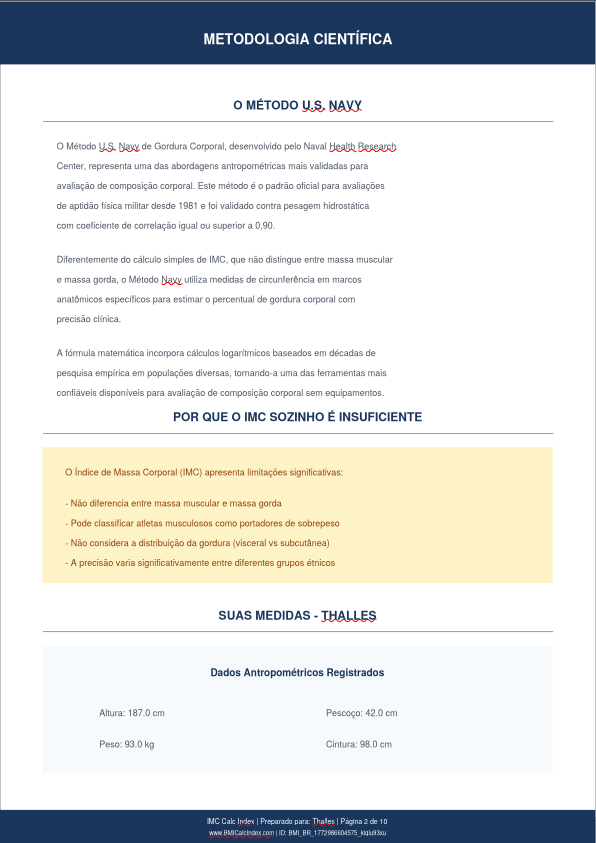
O Método U.S. Navy foi desenvolvido pelo Naval Health Research Center americano para calcular o percentual de gordura corporal com precisão clínica. Utiliza medidas de circunferência (cintura, pescoço e quadril para mulheres) em fórmulas logarítmicas validadas. É o padrão oficial das Forças Armadas dos EUA desde 1981, com correlação acima de 0,90 com pesagem hidrostática — o método mais preciso existente. Diferente do IMC, ele distingue músculo de gordura, entregando um diagnóstico real da sua composição corporal.
O IMC não distingue músculo de gordura. Duas pessoas com o mesmo IMC podem ter composições completamente diferentes: uma atlética com 12% de gordura e outra sedentária com 35%. O percentual de gordura corporal revela exatamente quanto do seu peso é tecido adiposo versus massa magra (músculos, ossos e órgãos) — essencial para avaliar riscos reais de doenças cardiovasculares, diabetes e síndrome metabólica.
Os valores variam por gênero. Para homens: gordura essencial (2-5%), atlético (6-13%), boa forma (14-17%), média (18-24%) e acima da média (25%+). Para mulheres: essencial (10-13%), atlético (14-20%), boa forma (21-24%), média (25-31%) e acima (32%+). O padrão militar americano exige no máximo 26% para homens e 36% para mulheres. Nosso relatório compara seu resultado com todos esses benchmarks.
A Taxa Metabólica Basal (TMB) é o número mínimo de calorias que seu corpo precisa diariamente em repouso total para manter funções vitais — respiração, circulação e funcionamento dos órgãos. Calculada pela equação de Mifflin-St Jeor, é a base de qualquer estratégia nutricional séria. Nosso relatório apresenta sua TMB e o Gasto Energético Total (GET) para 5 níveis de atividade física.
A gordura visceral é armazenada dentro da cavidade abdominal, ao redor dos órgãos. O indicador mais confiável sem exames é a Relação Cintura-Estatura (RCE): cintura (cm) ÷ altura (cm). Abaixo de 0,5 = baixo risco; 0,5-0,59 = moderado; acima de 0,6 = alto risco. Gordura visceral elevada está diretamente associada a diabetes tipo 2, hipertensão e doenças cardiovasculares. Nosso relatório calcula seu RCE automaticamente.
Para perda de gordura saudável e sustentável, recomenda-se um déficit de 400-500 calorias/dia abaixo do Gasto Energético Total (TMB × fator de atividade). Um déficit de 500 kcal/dia resulta em perda de aproximadamente 0,45 kg por semana — o ritmo mais saudável segundo a medicina do esporte. Nosso relatório calcula sua meta calórica personalizada com a distribuição ideal de proteínas, carboidratos e gorduras.
Para homens: altura (cm), circunferência da cintura (cm, na parte mais estreita) e circunferência do pescoço (cm, abaixo do pomo de adão). Para mulheres: altura, cintura, pescoço e quadril (cm, na parte mais larga). Use fita métrica flexível com a pessoa ereta. As medidas devem ser sobre a pele ou roupa fina, sem comprimir.
Sim, 100%. O PDF de 10 páginas é gerado dinamicamente com seu nome, idade, gênero, peso, altura e medidas específicas. Inclui IMC, percentual de gordura, massa gorda em kg, massa magra em kg, idade metabólica, TMB, GET para 5 níveis de atividade, metas calóricas com distribuição de macros, data estimada para o objetivo e cronograma semanal de exercícios. Cada relatório é único.
O download é liberado imediatamente após aprovação pelo Mercado Pago — geralmente em menos de 1 minuto. O botão de download aparece automaticamente nesta mesma página, sem necessidade de criar conta, fornecer e-mail ou aguardar envio. O processo é 100% automático e instantâneo.
A tabela da OMS é a mesma para ambos os sexos. Porém, mulheres naturalmente têm mais gordura corporal que homens com o mesmo IMC, devido a diferenças hormonais e fisiológicas. Por isso, o percentual de gordura (Método Navy) é mais relevante do que o IMC isolado — especialmente para mulheres e para quem pratica atividade física regularmente.
O que é o IMC e para que serve?
O Índice de Massa Corporal (IMC) é uma medida internacional adotada pela Organização Mundial da Saúde (OMS) para avaliar se um adulto está dentro de um peso saudável para sua altura. O cálculo divide o peso em quilogramas pelo quadrado da altura em metros. Amplamente utilizado em triagens de saúde pública, o IMC tem limitações importantes quando usado isoladamente.
Por que o IMC sozinho não é suficiente?
O IMC não diferencia tecido muscular de tecido adiposo. Um atleta musculoso pode ter IMC de "sobrepeso" com apenas 12% de gordura, enquanto uma pessoa sedentária pode ter IMC "normal" com 30% de gordura. Por isso, profissionais de saúde recomendam sempre complementar o IMC com uma avaliação de composição corporal — como o Método U.S. Navy.
O Método U.S. Navy: padrão científico para composição corporal
Desenvolvido pelo Naval Health Research Center e adotado pelas Forças Armadas americanas desde 1981, o Método Navy utiliza medidas de circunferência para estimar o percentual de gordura com alta precisão científica. Validado em estudos populacionais amplos, apresenta correlação acima de 0,90 com pesagem hidrostática. Nosso relatório profissional aplica essa metodologia aos seus dados individuais, gerando um diagnóstico completo e personalizado de 10 páginas.